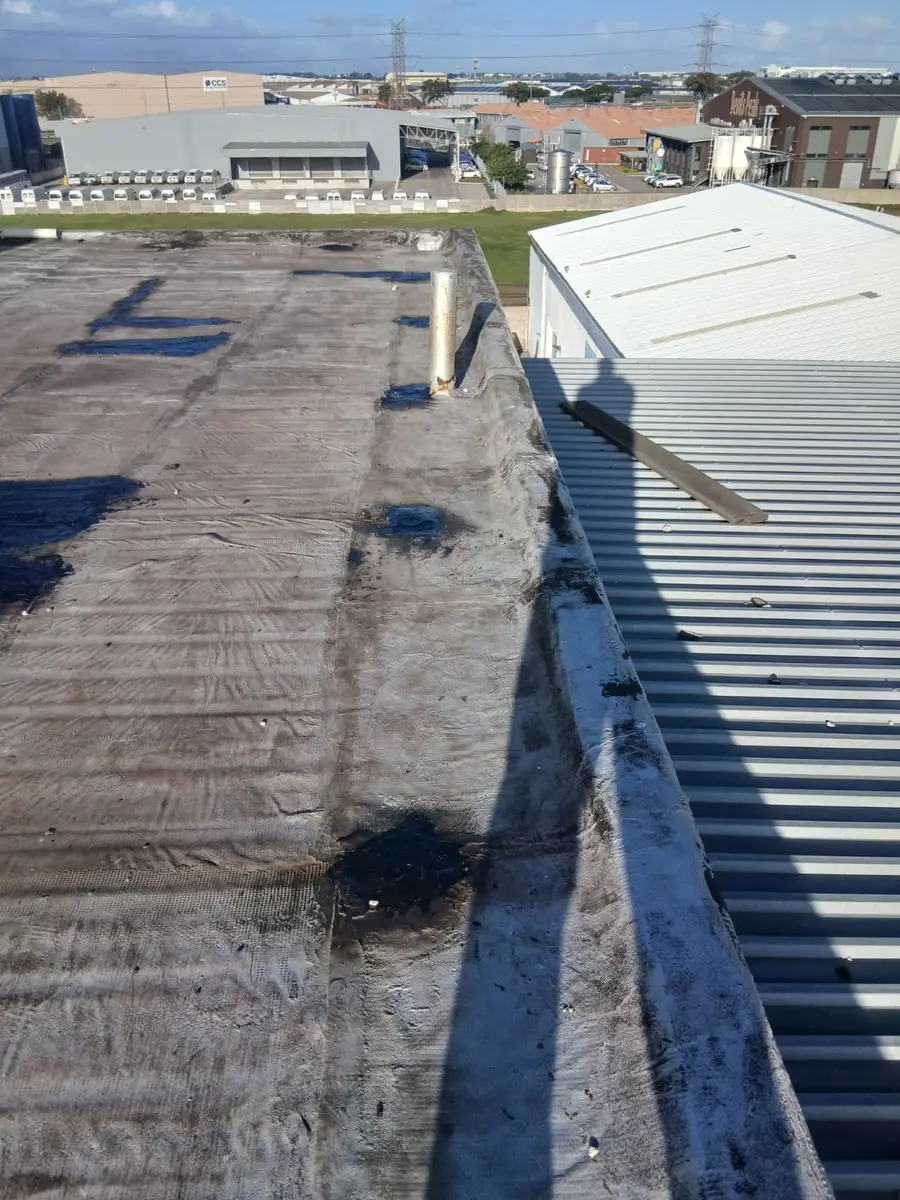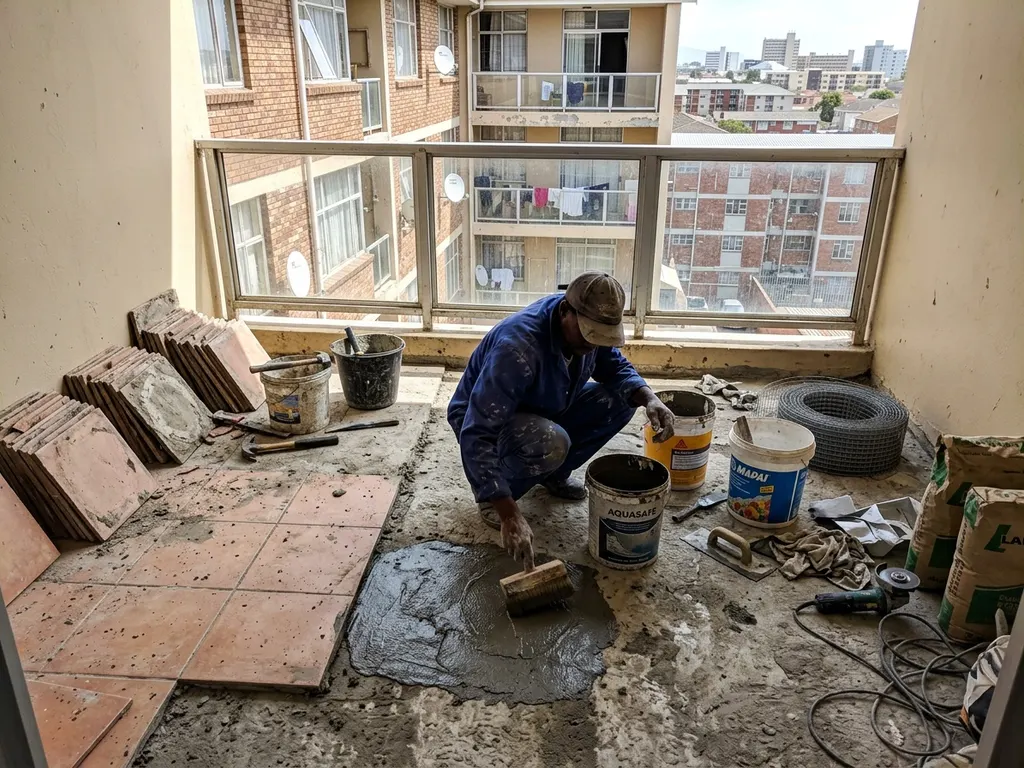
Balcony & Deck Waterproofing in Durbanville & Northern Suburbs
Vetted Durbanville contractors for balcony, deck and patio waterproofing — tile-bed sealing, liquid membranes and torch-on systems. Body-corporate friendly.
Benefits
Mandatory 24-48 hour flood test before re-tiling — no shortcuts
Body-corporate-friendly: written reports, scope letters, AGM-ready quotes
Tile-matching service where original tiles can't be salvaged
Movement joints installed at perimeter and across spans (prevents future cracking)
10-year workmanship guarantee on the membrane layer
Manufacturer-approved liquid PU and torch-on systems (Sika, Index, Mapei, Cemcrete)
Our Process
Free on-site inspection — identify leak path, check substrate fall and drainage
Lift existing tiles and screed (carefully where tiles will be re-used)
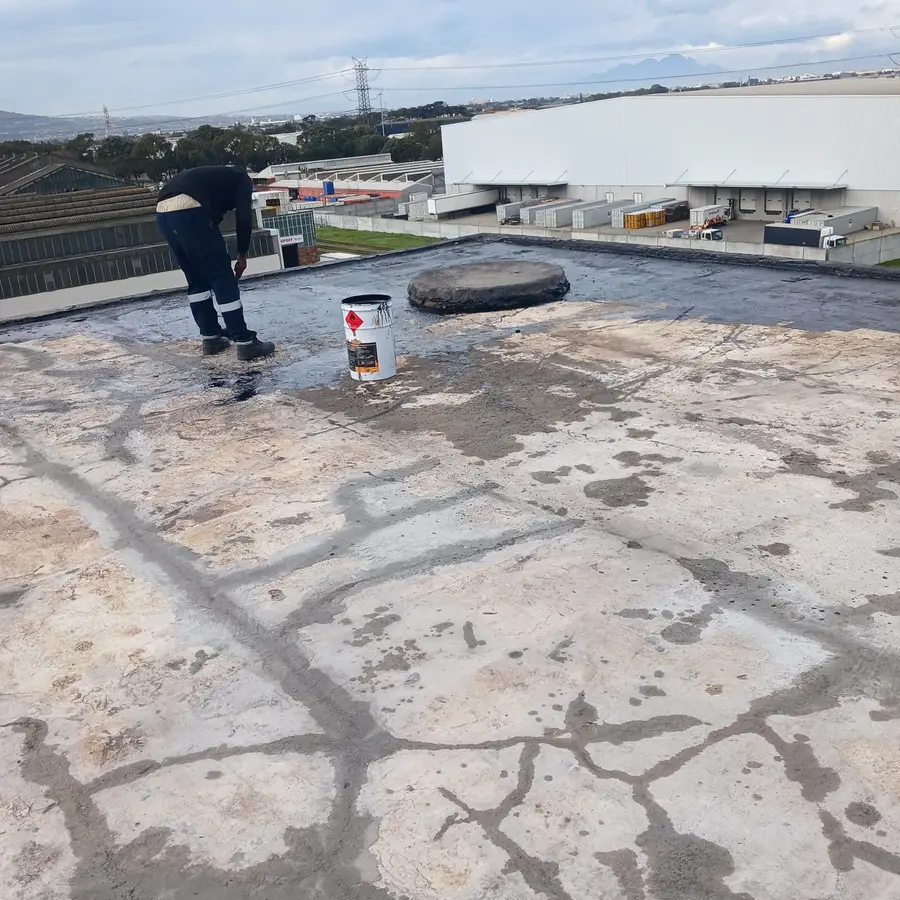
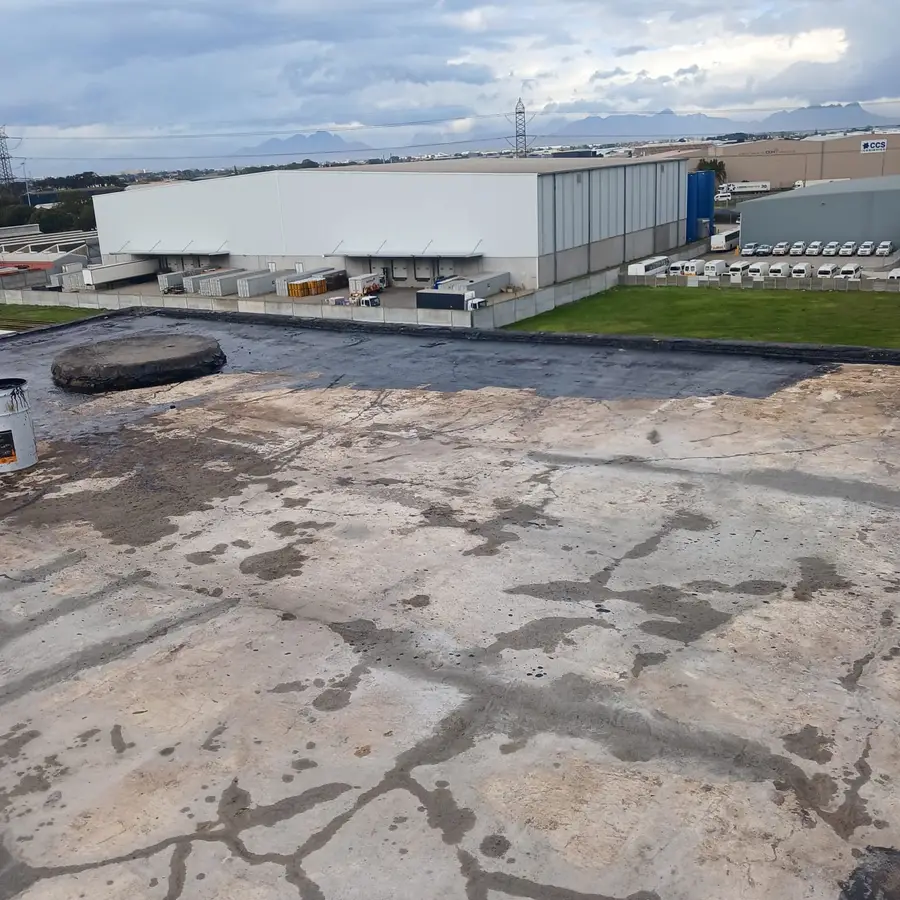
Inspect and repair concrete substrate — patch cracks, re-establish 1:80 fall to outlets
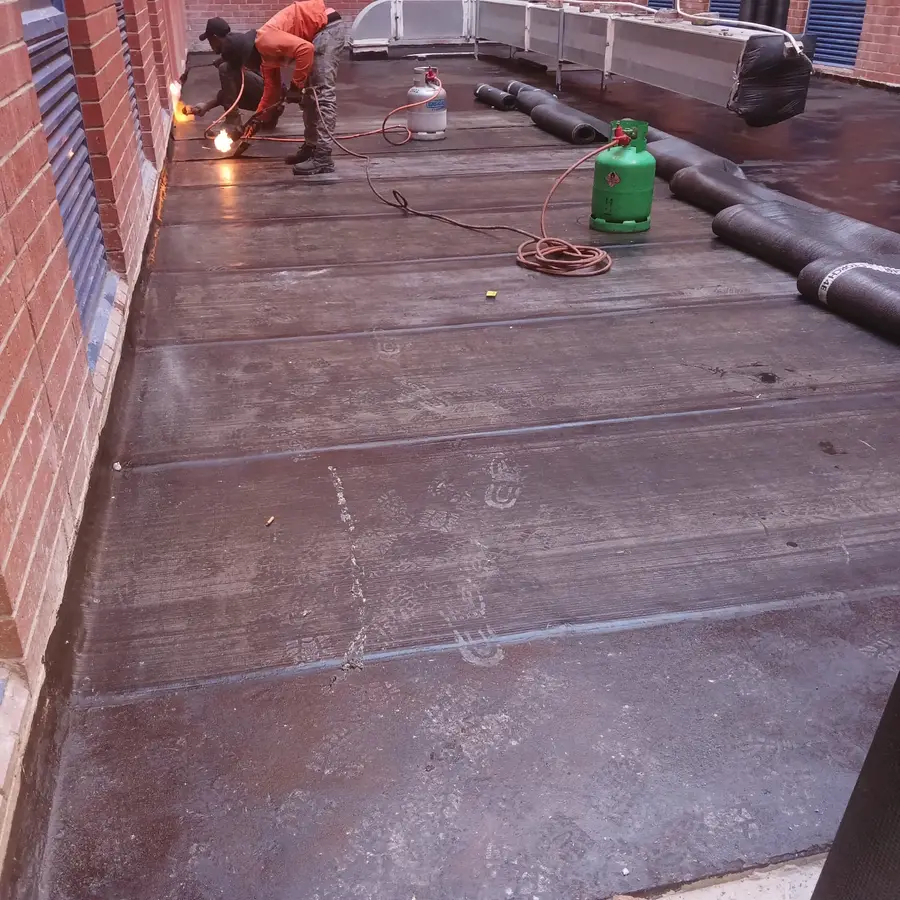
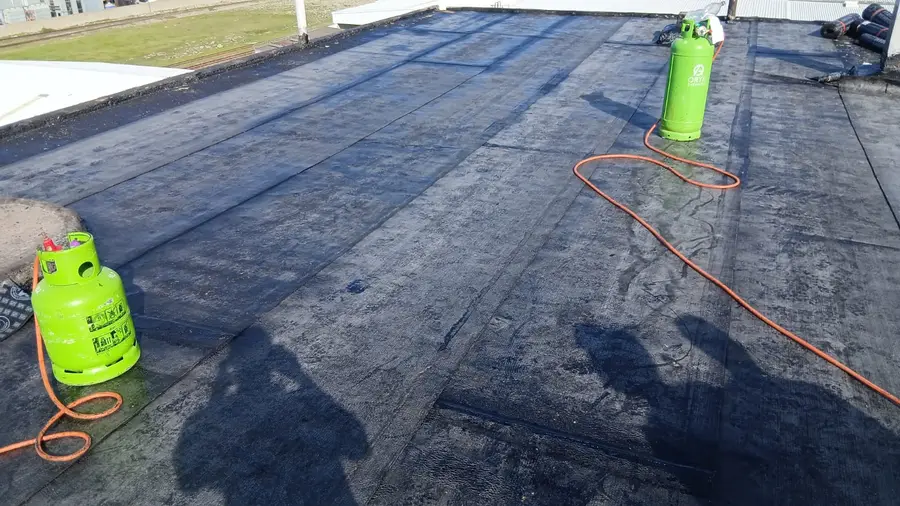
Apply waterproof membrane system (liquid PU, torch-on or cementitious tanking) with upturns at walls and around drain outlets
Flood test — plug drains, fill to 50mm depth, hold 24-48 hours, monitor unit below
Lay screed bed and re-tile with correct movement joints and silicone perimeter seal
Grout, clean and issue 10-year workmanship guarantee certificate
Pricing
From R280/m²
2026 indicative ZAR pricing. Liquid membrane only R280-R450/m². Torch-on bitumen R350-R600/m². Full strip + waterproof + re-tile R600-R1,100/m² (excl. tile cost). Body-corporate jobs quoted per scope letter.
Get Accurate QuoteFrequently Asked Questions
Do tiles need to come up to fix a leak?
In 90% of cases, yes. The waterproofing layer sits below the tiles and screed, so the only way to repair a failed membrane is to lift everything down to the slab. Surface sealers and tile-grout repairs are short-term — they buy you a season at most. Reputable Durbanville contractors will tell you upfront that re-tiling is part of the job, not an upsell.
Liquid membrane vs torch-on for a balcony — which is better?
For most residential balconies under 30m², liquid polyurethane membrane is the better choice — it self-levels around drain outlets, bonds seamlessly into wall upturns, and there's no naked flame on a high-rise. Torch-on bitumen suits larger flat balconies and ground-floor patios where speed matters and the substrate is sound concrete. Body corporates often specify torch-on for the longer track record (15-20 years), but liquid PU has caught up technically.
How long until I can use my balcony again?
Plan for 7-14 days off the balcony. Membrane application 1-2 days, mandatory flood test 24-48 hours, screed and re-tile 2-3 days, grout cure 24 hours, silicone perimeter cure 24 hours. Skipping the flood test (some contractors do) is the single biggest reason balconies leak again within a year — insist on it.
What's a 'flood test'?
After the membrane is laid and before any tiles go back, the contractor plugs the drain outlets, fills the balcony with 30-50mm of water, and leaves it standing for 24-48 hours. The unit below is monitored for any sign of moisture. If the membrane holds water under static pressure, it will hold against rain. No flood test = no proof = no comeback if it leaks. Always written into the scope on body-corporate jobs.
Will the new waterproofing match my existing tiles?
If your tiles are intact and a recent enough range, the contractor will lift them carefully (expect 10-15% breakage), store them, and re-lay after waterproofing. If they're discontinued or break-rate is too high, you'll need to choose new tiles. Several listed contractors keep small stockpiles of common South African porcelain ranges (Italtile, CTM, Tile Africa) and can often source close matches. Get the tile sample identified before the quote.
Wood/timber decks — is the process different?
Completely different. Timber decks aren't waterproofed on top — water needs to drain through the gaps between boards. Instead, the area UNDER the deck (over a habitable space or storeroom) is waterproofed at the structural slab or sealed sub-deck membrane level. The boards are lifted, joists inspected for rot (common in Cape Town's coastal humidity), the membrane installed below, then boards re-laid with stainless fixings. If your timber deck is over open ground, you don't need waterproofing — just rot-proofing of the joists with creosote or Tanalith E.
Balcony & Deck Waterproofing Across Durbanville & the Northern Suburbs
Our team provides balcony & deck waterproofing across these Northern Suburbs neighbourhoods — free on-site inspection on every quote:
Ready to Get Started?
Get a free, no-obligation balcony & deck waterproofing quote from our Northern Suburbs team — on-site inspection included.
Get Free Quote Now